blog
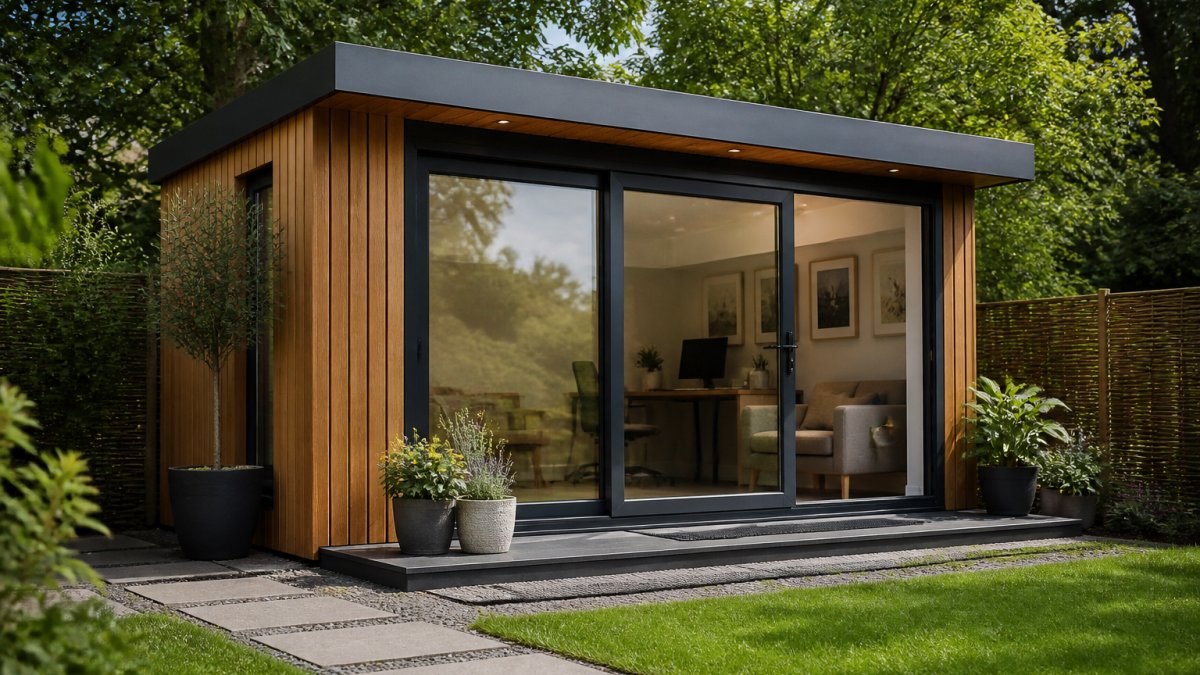
7 Things to Know Before Buying a Garden Office
Adrian Bennett · 31 October 2026
Last Updated: October 31, 2026
Quick Summary
A garden office is worth it for many hybrid workers because it gives you a short commute, a door you can close, and a workspace that is not your kitchen table. The payback depends on avoided rent, commuting costs and the value added to your home over time, so if you are not staying put for at least five years, the maths is harder to justify.
- A garden office is a separate, insulated building in your garden used as a year-round workspace.
- Gallup's research found 52% of remote-capable employees now work in a hybrid arrangement.
- A cheap quote that excludes groundwork, electrics or insulation is an incomplete build.
- Most garden offices fall under permitted development, but limits on height, size and siting vary.
- Every build from Kent Bespoke Garden Rooms comes with a 10-year structural guarantee.
Table of Contents
- The Real Benefits of a Dedicated Garden Office
- What a Garden Office Costs and How the Payback Works
- Garden Office vs Loft Conversion: Which Suits Remote Work?
- Garden Office Disadvantages You Should Weigh Up First
- Garden Office Planning Permission UK: What Actually Applies
- Get a Free Quote for Your Garden Office
- Frequently Asked Questions
The Real Benefits of a Dedicated Garden Office
Is a garden office worth it for working from home? For many hybrid workers, it can be.
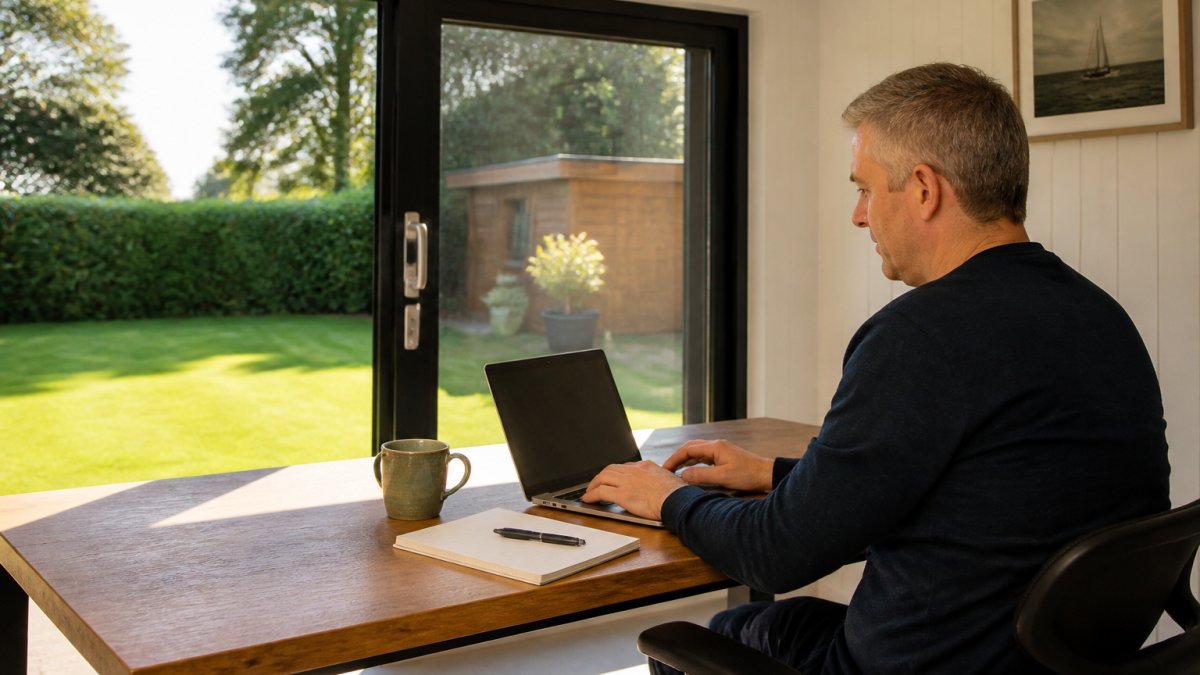
That separation matters more than most people expect. According to Gallup's research on dominant work models, 52% of remote-capable employees now work in a hybrid arrangement.
At Kent Bespoke Garden Rooms™, we have over 25 years of construction experience building garden offices and annexes.
Focus, productivity and fewer distractions
A garden office removes the two biggest work-from-home distractions: household noise and other people's routines. The Outdoor Office Work research project looked at how the physical environment shapes the employee experience, and the finding is simple. A dedicated setting changes how you work, not just where.
The numbers back this up. LinkedIn's analysis of remote work trends reports that 62% of workers feel more productive when working from home. That gain only shows up when the workspace is actually yours.
Work-life separation and a proper commute
This is the benefit buyers underestimate. The 2026 Remote Work Well-Being Survey found that 69% of remote workers report better work-life balance over the past 12 months. A garden office is what makes that separation physical rather than theoretical.
If you are weighing up whether the outlay makes sense, the answer depends on how you work, how long you plan to stay, and what you would otherwise spend.
What a Garden Office Costs and How the Payback Works
Garden office cost depends on size, specification, insulation, electrics and groundwork, so any single figure online is a rough guide at best. We quote each project individually because a 3m x 3m insulated office and a fully self-contained annex are not the same build.
To answer whether a garden office is worth it, you need the total cost of ownership, not just the build price.
The build cost
Pricing depends on size, specification, groundwork, access and finish, so we provide an individual quote for each project. Visit our website for current prices or to request a free quote.
The costs that catch people out
- Insulation and glazing. A year-round building needs proper insulation and double or triple glazing.
The payback case
The payback case rests on three things:
Watch out: a cheap quote that excludes groundwork, electrics or insulation is not a cheap build. It is an incomplete one, and the difference surfaces in year two.
Who should not buy one on cost grounds
If you work from home only occasionally, a garden office is a luxury rather than infrastructure. If your garden is small or has poor access, groundwork costs can escalate. If you rent, you cannot make the investment pay back through property value. And if your budget is tight, a well-set-up spare room or a co-working membership may be the more sensible first step.
Garden Office vs Loft Conversion: Which Suits Remote Work?
A loft conversion adds space inside the house. A garden office adds space outside it.
A loft desk is still in the house. You hear the doorbell and the washing machine.
Loft conversions suit households that need another bedroom or bathroom.
Best for: hybrid and full-time remote workers who need quiet. Skip if: your main need is extra sleeping or bathroom space.
Garden Office Disadvantages You Should Weigh Up First
The honest disadvantages are real, including the practical and legal catches that decide whether a garden office is worth it for you.
- Security. A garden office can attract burglars because it holds expensive equipment. Locks, alarms and good lighting are not optional, and you should check that your home insurance covers outbuildings and specifies high-value items like laptops and monitors.
- Longer hours. The 2026 survey found 44% of remote workers put in longer hours from home, and a workspace you never leave makes that easier. Set a finish time and stick to it.
- Maintenance. Timber cladding needs treating every few years, seals and gutters need checking, and flat roofs need inspecting. Budget time and money for this.
- Budget creep. Electrics, heating and internet connections add to the base price, so a competitive quote can double once these are included.
Who should not buy one
- Occasional home workers. If you work from home one day a week, a garden office is a luxury; a well-organised spare room or a co-working day pass is likely better value.
- Small or awkward gardens. Limited space or poor access can make groundwork and siting costs uneconomic.
- Renters. You cannot make the investment pay back through property value, and you may not have permission to build.
- Tight budgets. If the build would stretch you financially, running costs and maintenance will add pressure. Consider a cheaper garden building or a hybrid arrangement first.
- People who need to be in the house. If your work requires frequent access to the main house, or you are a carer, the separation a garden office provides can become a barrier rather than a benefit.
Here are the practical catches to weigh before you commit to a garden office.
| Issue | What to watch for | What to do |
|---|---|---|
| Security | Holds expensive equipment and can attract burglars | Fit locks, alarms and lighting; check outbuilding insurance cover |
| Longer hours | 44% of remote workers put in longer hours from home | Set a finish time and stick to it |
| Maintenance | Timber cladding, seals, gutters and flat roofs need checking | Budget time and money for upkeep |
| Budget creep | Electrics, heating and internet can double a competitive quote | Confirm what the quote includes |
| Planning and building regs | Limits on height, size and siting vary by location | Check with your local planning authority first |
| Insurance and business use | Standard home insurance may not cover business equipment | Tell your insurer; consider a separate policy |
| Access and weather | Paths need lighting and steps need handrails | Plan level access from the start |
| Damp and ventilation | A sealed, insulated box needs ventilation | Use trickle vents, extractors or a dehumidifier |
Garden Office Planning Permission UK: What Actually Applies
Most garden offices fall under permitted development, meaning no planning application is needed provided you stay within size, height and siting limits.
Building regulations are a separate question: if the structure is used as sleeping accommodation, or is a self-contained annexe, different rules apply.
Check the current rules with your local planning authority before you commit, because the figures change.
Get a Free Quote for Your Garden Office
The question is not whether a garden office is worth it in the abstract, but whether it is worth it for your garden, your working pattern and your budget.
We build bespoke garden rooms, garden offices and self-contained annexes. Every build comes with a 10-year structural guarantee, and we offer FCA-regulated finance options if you would rather spread the cost than pay upfront.
If you have a small garden or you are unsure about planning, that is exactly the conversation to have early. You can explore bespoke garden rooms in Kent to see what is possible on a tight plot.
Frequently Asked Questions
Is a garden office worth the investment for working from home?
It depends on how often you work from home and whether your household has a quiet room to spare. A garden office gives you a separate workspace with its own entrance, heating and internet connection, so calls and deep-focus work stop competing with family life. Weigh the build cost against the rent you would otherwise pay for external office space and the value a well-built garden room can add to your property.
Does a garden office add value to your home?
A well-built garden office can make a property more attractive to buyers who work from home, because it offers usable space without the disruption of a loft conversion or extension. How much value it adds depends on build quality, insulation, power and how well it fits the garden. A structure that is damp, poorly insulated or hard to maintain is more likely to put buyers off. Ask about structural guarantees and the specification behind the build before you commit.
Do you need planning permission for a garden office?
Many garden offices fall under permitted development, which means no planning application is needed, provided the building sits within the allowed height and footprint limits and is not in a conservation area or other restricted location. Outbuildings used as a home office are normally treated differently from self-contained living accommodation, which usually does need permission. Rules vary by property and location, so confirm the position for your address before work starts, and check building regulations for electrical and structural work.
What are the main disadvantages of a garden office?
The upfront cost is the obvious one, and it is higher than most people expect once insulation, electrics and a proper base are included. You also need to plan for year-round comfort: heating, cooling and a reliable internet connection all need sorting before the first winter. Security matters too, because a garden building holding a laptop and monitor can attract attention. Finally, maintenance is ongoing and should be planned for from the outset.
A garden office only pays off when it is built properly, insulated for year-round use and specified for how you actually work. Get started with Kent Bespoke Garden Rooms™ and request a free quote for a build backed by a 10-year structural guarantee and finance options regulated by the FCA.
